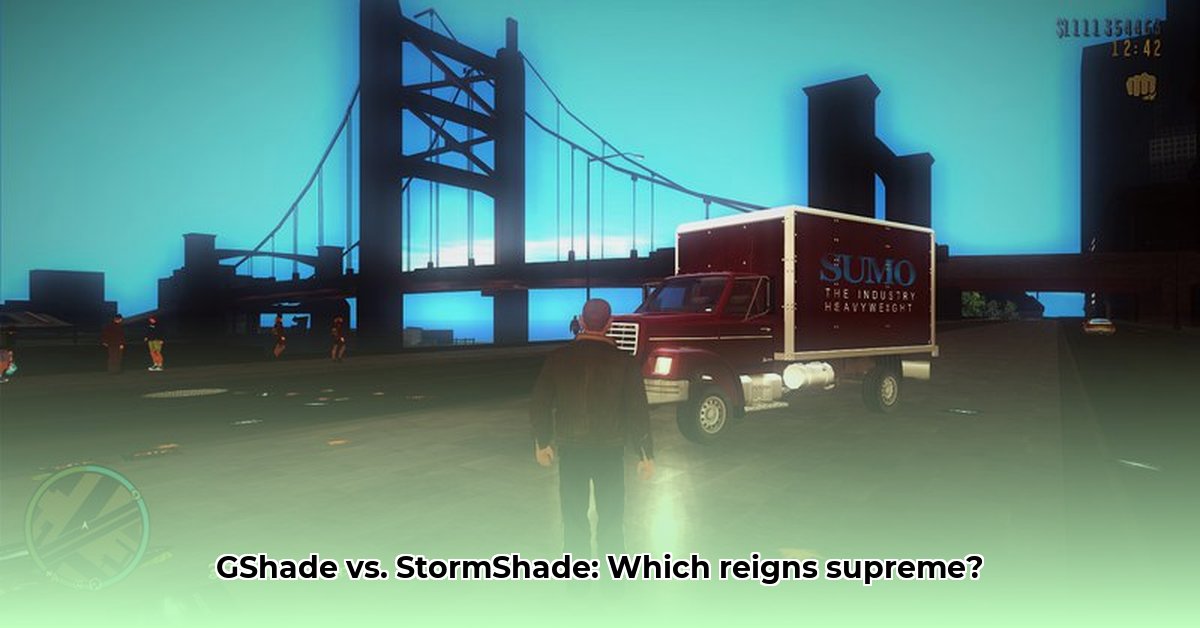
Want to enhance your game's visuals with realistic reflections? This guide compares two popular ReShade reflective bump mapping (RBM) shaders: GShade and StormShade. We'll cover installation, configuration, performance considerations, and help you choose the best option for your system and preferences. We'll also address the critical need for individual benchmarking.
Understanding Reflective Bump Mapping (RBM)
Reflective bump mapping simulates how light interacts with uneven surfaces, creating more realistic reflections. Imagine a puddle reflecting a building—that's RBM in action. It adds depth and detail, making game environments more immersive. Both GShade and StormShade achieve this, improving visual fidelity. But how do they compare?
GShade vs. StormShade: A Detailed Comparison
Both shaders enhance reflections, but differ in compatibility, optimization, and customization options. This comparison will help you decide which shader best suits your needs and hardware.
Functionality and Compatibility
Both GShade and StormShade provide core RBM functionality, adding realistic reflections. However, a key difference lies in their ReShade version compatibility.
| Feature | GShade | StormShade |
|---|---|---|
| ReShade Version | Optimized for ReShade 4.X (newer version offers better performance and stability) | Primarily designed for ReShade 3.X (older version might be less stable) |
| Performance | Potentially better due to 4.X optimization (requires individual benchmarking) | Performance varies; systematic benchmarking is lacking |
| Parameter Control | Highly customizable; extensive options for fine-tuning | Highly customizable, offering a broad range of settings |
| Compatibility | Requires ReShade 4.X | Requires ReShade 3.X |
GShade’s optimization for ReShade 4.X suggests better performance, but individual testing is crucial. StormShade, built for ReShade 3.X, may offer adequate performance depending on your system.
Optimization and Parameter Customization
The lack of standardized benchmarks for RBM shaders makes direct performance comparisons difficult. User experiences vary widely, depending on hardware and game. High-end systems might see minimal impact, whereas lower-end systems could experience significant frame rate drops.
Both GShade and StormShade offer extensive parameter customization. The sample count proves particularly important. Higher sample counts yield more detailed reflections but significantly increase processing demands. Lower counts reduce performance strain but can result in visible artifacts (e.g., jagged lines).
| Parameter | GShade | StormShade | Impact |
|---|---|---|---|
| Sample Count | Adjustable; higher counts = improved detail, reduced FPS | Adjustable; similar trade-off between visual quality and performance | Directly influences visual fidelity and frame rate |
| Reflection Intensity | Adjustable | Adjustable | Controls the strength of reflected light |
| Normal Map Strength | Adjustable | Adjustable | Affects the detail of reflected geometry |
Finding the optimal balance requires careful experimentation and personal benchmarking.
Practical Guide: Installation and Configuration
Installing and configuring these shaders is straightforward, although individual results may vary due to varying game engines and hardware capabilities.
Step 1: Downloading and Installing the Shaders
- Download the latest compatible versions of GShade or StormShade from reputable sources. Ensure compatibility with your ReShade version.
- Install ReShade if you haven't already, following the installation guide carefully.
- Install the chosen shader using ReShade's built-in interface.
Step 2: Shader Configuration
- Launch your game with ReShade enabled.
- Open the ReShade interface (typically by pressing the Home key).
- Access the shader's settings.
- Adjust parameters, starting with lower sample counts to evaluate performance. Gradually increase sample counts while monitoring frame rates.
Remember: start with conservative settings and gradually increase intensity until you reach a satisfactory balance between performance and desired visual enhancements.
Performance Considerations and Benchmarking
RBM shaders significantly increase processing load, impacting performance. High sample counts drastically increase demand. Individual benchmarking is crucial for determining the optimal settings for your system. There isn't a one-size-fits-all solution; what works flawlessly on a high-end system might cripple performance on a lower-end system.
How do you benchmark? Start by recording frame rates at various settings. Consider tools like MSI Afterburner or RTSS to measure your FPS. Note the performance impact of different sample counts and other parameters. Consistent testing under various in-game situations provides the most reliable performance data.
Potential Risks and Mitigation Strategies
Using third-party shaders introduces potential risks:
- Performance Degradation: High settings can dramatically reduce frame rates. Mitigation: Start low, incrementally adjust parameters.
- Game Instability: Incompatible shaders or incorrect configurations can cause crashes. Mitigation: Always back up save files before installing; strictly follow installation instructions.
Conclusion: Choosing the Right Shader
The optimal shader depends on your hardware, game, and priorities. GShade, optimized for ReShade 4.X, might offer better performance but requires that version of ReShade. StormShade's compatibility with ReShade 3.X provides an option for users on older systems. Thorough benchmarking is essential to determine the best balance of visual quality and performance for your setup. Remember, careful experimentation is crucial to fully leverage the power of RBM shaders without sacrificing gameplay experience.
Further Reading
This comprehensive guide helps you navigate the world of ReShade RBM shaders. Remember that individual testing and experimentation are key to achieving optimal results. Happy gaming!
⭐⭐⭐⭐☆ (4.8)
Download via Link 1
Download via Link 2
Last updated: Tuesday, April 29, 2025